


Qmee: Paid Survey Cash Rewards
4.222.28K Reviews
App Specs
- Version
- 3.8.27
- Updated On
- License
- Free
- Downloads
- 1,000,000+
- Developer
- Qmee
- Categories
- Lifestyle
- Platform
- Android, iOS
Screenshots


 Analysis by AppCompare
I approached Qmee as a small, practical way to earn rewards during spare moments rather than as a serious income source. It is a free lifestyle app from Qmee built around paid surveys, with PayPal cash-out presented as its central appeal. After using it, my view is fairly simple: it can be worthwhile when a survey fits your profile and you are already waiting around, but it demands patience and realistic expectations.
The app has been available since June 16, 2016, and its current version is 3.8.27. It is suitable for Everyone and runs on Android 7.0 or later. The large audience helps explain why it feels like an established survey service rather than a brand-new experiment: it has passed one million installs, with an average rating of 4.2 from roughly 112,000 ratings. Those figures do not guarantee that every user will have the same experience, but they do make Qmee easier to take seriously than an unknown rewards app.
How Qmee feels when you use it for real
When I use Qmee in real life, I find it helps to treat each visit as a quick decision rather than a commitment to keep searching: check what is available, choose only what fits the moment, and close the app when nothing looks worthwhile. That keeps surveys from turning spare time into a chore and makes it easier to notice which opportunities suit my patience and comfort level.
A survey app designed for short gaps in the day
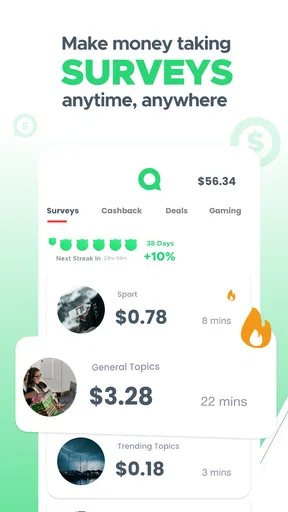
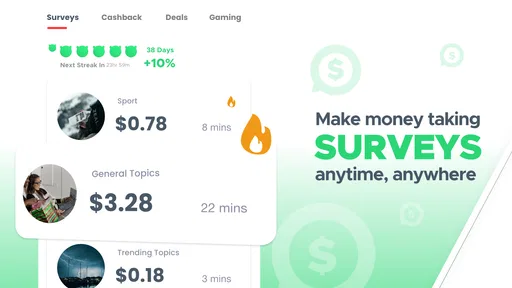
The basic workflow is easy to understand. I open the app, look for available survey opportunities, read the expected reward and time commitment, and decide whether the exchange seems worthwhile. That makes it a natural fit for a bus ride, a waiting room, a lunch break or the few minutes before an appointment. It is much less suitable when I need predictable earnings or want to complete a long, uninterrupted work session.
The most important mental adjustment is that Qmee is not a normal job board. Surveys depend on demographic targeting, research demand and screening questions. A survey may appear relevant and still end quickly if the answers do not match the audience being sought. That can feel frustrating, especially when I have already spent time answering introductory questions. I would treat those moments as part of the trade-off rather than assume every listed survey is guaranteed work.
I also found that the value of a survey is not just its displayed reward. I consider the estimated length, the number of screening questions, how focused I feel and whether I am using mobile data. A short survey can make sense during idle time, while a longer one may not be worth interrupting dinner or a task that requires concentration. This simple calculation prevents the app from taking over more time than I intended.
What makes the PayPal option useful
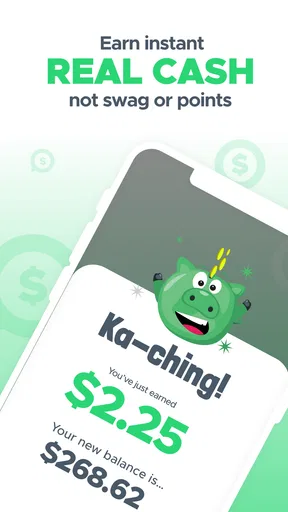
The ability to cash out through PayPal is the clearest practical advantage for people who already use that service. It gives the rewards a familiar destination instead of leaving them locked inside an unfamiliar points system. Before starting, I would make sure the account details are entered carefully and that the PayPal account I plan to use is the one I actually check.
Worth Reading Before You Choose

EA SPORTS FC Mobile 26 Is a Bigger Football Game, but It Takes Time

Flipboard Shows What News Apps Must Do Beyond the Feed

Switching to Android Auto Means Rethinking Your Driving Routine

Google Calendar Makes a Crowded Week Easier to Manage

Ludo King Makes the Most of the Minutes Between Plans

Baby Panda World Brings Quick Play to Modern Phones, but Its Game Library Feels Busy
That does not mean the app should be viewed as instant cash whenever I want it. Rewards platforms still involve account checks, eligibility rules and processing steps, so I would avoid planning a bill payment around a balance earned in the app. The sensible approach is to see the money as flexible spending or a small bonus. If a user needs guaranteed same-day income, a conventional part-time shift or freelance platform is a better match.
Another useful habit is to cash out periodically rather than letting a large balance sit untouched. Smaller, regular withdrawals make it easier to notice whether the account and payment details are working as expected. They also keep the reward connected to a real purpose, such as covering a coffee, adding to a transport budget or saving for a modest purchase.
Trust starts with what the app lets me control
For a survey app, trust is not only about the company name or the number of downloads. I pay attention to the choices available around my profile, survey participation and account access. A good experience should let me decide when to participate, decline an opportunity and stop using the service without feeling trapped by a complicated process.
Qmee’s basic model gives me a clear choice each time a survey appears: I can take it or leave it. That sounds obvious, but it matters because survey invitations can be tempting when they show a reward. I prefer to pause and check the questions, estimated effort and relevance before agreeing. If the opening questions feel too personal for the reward, declining is the right decision.
I would also review the account and privacy areas before completing many surveys. The exact choices visible to a user can depend on the app version and device, so I do not assume that one person’s screen will look identical to another’s. What matters in practice is whether I can understand the available controls, adjust what I am comfortable sharing and remove the app later if it no longer feels worthwhile.
Data-sensitive moments deserve extra attention
Surveys naturally ask about the participant. Some questions may concern ordinary preferences, while others can feel more personal because they relate to household circumstances, habits, employment or demographics. I never answer automatically just because a reward is displayed. I read the question, consider why it might be relevant and decide whether the payment justifies sharing that information.
One of my most useful rules is to separate eligibility information from information I do not need to volunteer. Screening questions may be necessary to determine whether a survey is suitable, but that does not mean I should provide extra details in a free-text field or continue if the topic makes me uncomfortable. If a survey becomes unexpectedly intrusive, I exit rather than trying to force completion.
I also avoid treating a survey session as private simply because I am using a phone. I do not complete sensitive questionnaires on a shared device, and I avoid using public Wi-Fi for anything involving account credentials unless I trust the connection. These are ordinary precautions, but they are especially sensible when an app combines personal profile information with reward payments.
Before committing to regular use, I would read the privacy and account information presented inside the app and in its official store materials. I look for explanations of what information is collected, how it is used, how account changes work and what happens when I stop participating. I do not infer more than those explanations actually say. A visible privacy notice is useful, but it is still worth reading the wording instead of relying on a general impression.
Small controls that improve the experience
My first practical tip is to create a routine rather than check Qmee constantly. Opening it once or twice during natural downtime is less distracting than refreshing repeatedly throughout the day. It also helps me judge the app by the surveys I can realistically complete, not by the possibility of a perfect opportunity appearing at any moment.
My second tip is to keep profile answers consistent and honest. Survey services use profile information to decide which opportunities may fit. Guessing, rushing or changing answers simply to qualify can lead to poor matches and a more frustrating experience. Accurate answers may reduce the number of surveys I see, but the invitations are more likely to be relevant and the resulting sessions less wasteful.
My third tip is to track time for a week before deciding whether Qmee deserves a regular place on my phone. I note how long I spend, how often I reach the end of a survey and whether the cash-out process suits me. This is more useful than judging the app after one unusually good or unusually disappointing session. The real question is whether the reward feels fair for my own available time.
A fourth useful boundary is to stop when concentration drops. Survey answers become less reliable when I am tired, distracted or rushing to finish. That can make the process unpleasant and may produce answers I do not genuinely mean. Qmee works best as a low-pressure activity, not as something I force myself to complete after a long day.
Who will probably enjoy it
I think Qmee is a good fit for someone who already has a PayPal account, is comfortable answering market-research questions and wants a casual way to turn spare minutes into small rewards. Students, commuters and people who spend time waiting may appreciate the convenience, provided they see it as occasional pocket money. The free price also makes it easy to try without paying an upfront subscription.
It can be especially useful for users who prefer direct cash-out over complicated loyalty catalogs. If I do not want to compare gift-card brands or wait for a points conversion, PayPal is a straightforward destination. The app’s lifestyle category also feels appropriate: this is a lightweight habit tool, not a professional finance application.
On the other hand, I would not recommend it to someone who dislikes personal questionnaires, has very limited patience for screening, or expects every session to produce a reward. It is also a poor choice for anyone looking for a dependable hourly rate. The amount of available work can vary, and eligibility is not entirely under the user’s control.
How it compares with familiar alternatives
Compared with ordinary cashback apps, Qmee asks me to spend time answering questions rather than simply shopping through a tracked offer. That can be better for someone who does not make many online purchases, but worse for a user who already shops through cashback portals and wants rewards attached to spending they planned anyway.
Compared with microtask platforms, the experience is narrower. Microtask services may offer categorization, transcription or other task types, while Qmee focuses on surveys. The narrower format is easier to understand, but it also means fewer ways to keep earning when survey supply is thin. A user who wants variety may prefer a platform with several task categories.
Compared with loyalty programs, Qmee feels more immediate because the activity is directly tied to a survey and PayPal cash-out. Loyalty programs can be slower but may require less personal disclosure if the reward comes from ordinary purchases. I would choose between them based on behavior: Qmee suits spare time, while cashback suits spending I was already going to do.
There is also a difference between Qmee and a normal paid research panel. A specialized panel may offer more carefully matched studies and a more formal research experience, while Qmee is convenient for browsing opportunities from a phone. The trade-off is that convenience does not remove the uncertainty of screening or availability.
Account habits and sensible boundaries
I recommend using a dedicated password that is not reused elsewhere and enabling any account security options that are visibly offered. I would keep the app updated through the official app store, particularly because the current release is version 3.8.27 and updates can change controls or improve compatibility. I would also sign out on a shared phone and avoid saving payment details where another person can access them.
If I decide to stop using the service, I would first review the balance, payment setup and account controls, then remove the app only after handling anything I still need. Deleting an icon is not always the same as closing an account, so I would look for the proper account-management route within the app. This is a general but important distinction for any rewards service that stores profile information.
I would contact support when a payment, survey completion or account issue does not behave as expected, keeping the relevant date and screen details. I would not repeatedly submit the same survey or create duplicate accounts to solve a problem. Those shortcuts can create more confusion and may undermine the account history needed to investigate an issue.
My cautious verdict after weighing the trade-offs
Qmee is an approachable survey-for-rewards app with a clear use case: fill spare time, answer questions honestly and withdraw rewards through PayPal. Its free access, Everyone rating and established presence make it easy to test, while the 4.2 average from about 112,000 ratings suggests that many users find the overall idea worthwhile. I still would not mistake popularity for a promise of consistent results.
My recommendation is to try it with a time limit and a privacy boundary. Decide in advance how long a session may last, skip surveys that feel too intrusive and judge the service by your actual reward-to-time experience. If the available surveys are relevant and the cash-out route fits your habits, Qmee can be a pleasant little addition to a phone. If you need predictable pay, dislike sharing demographic information or become annoyed by screening, another type of earning app will serve you better.
In the end, the strongest reason to use Qmee is control over when you participate, not the promise of effortless money. I like it most as an occasional waiting-room companion, used deliberately and without financial expectations. That cautious approach lets the app provide a useful bonus while keeping my time, attention and personal choices firmly in my hands.
Pros
- Low payout threshold lets you cash out earnings quickly.
- Offers PayPal
- Venmo
- gift cards
- and other redemption options.
- Survey availability is refreshed frequently throughout the day.
- No purchase is required to participate in available surveys.
- Simple interface makes earning opportunities easy to find.
Cons
- Some surveys screen you out after answering several questions.
- Earnings per survey can be low compared with the time required.
- Profile information must be completed to receive better matches.
- Survey availability varies significantly by country and demographics.
- Notifications may become frequent if many earning alerts are enabled.
FAQs for Qmee: Paid Survey Cash Rewards
What is Qmee: Paid Survey Cash Rewards, and how does it work?
Qmee is a rewards app that lets users earn money by completing online surveys and, depending on availability, participating in other promotional activities. After creating an account, the app matches you with surveys based on your profile information. Each survey shows its estimated reward and length before you begin, although eligibility can change and some surveys may end early if you do not match the target audience.
Is Qmee legitimate, and can users really receive cash rewards?
Qmee is a legitimate survey-rewards platform, but it should not be viewed as a full-time income source. Users can receive rewards for successfully completed activities, with the available amount depending on their location, profile, and the number of surveys offered. In my experience, the app is most suitable for earning occasional extra money during spare moments rather than expecting consistent or substantial earnings.
How can I withdraw money from Qmee?
Qmee generally allows eligible users to cash out their available balance through supported payment methods, such as PayPal, while options can vary by country and account status. One attractive feature is that the platform may allow withdrawals without requiring a high minimum balance. Before starting, check the current payment options, verification requirements, and processing conditions shown inside the app, since these details may change.
How much money can you earn with Qmee surveys?
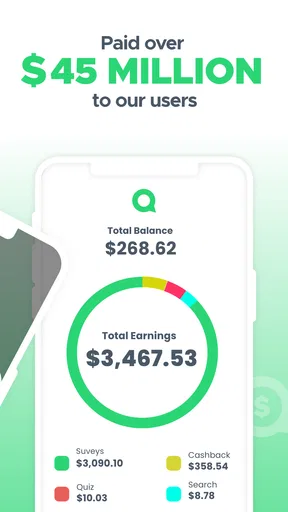
Your earnings on Qmee depend on survey availability, completion time, demographic profile, and the demand for participants in your region. Some surveys offer only a small reward, while longer or more specialized questionnaires may pay more. The app is easy to use, but survey invitations are not guaranteed, and disqualifications can reduce your effective hourly earnings, so realistic expectations are important.
Is Qmee safe to use, and what personal information does it require?
Qmee requires personal and demographic information to match you with relevant market-research surveys. As with any rewards app, you should review its privacy policy and understand how profile data, survey responses, and payment details are handled before registering. Use a strong password, download the app only from an official store, and avoid providing sensitive information in surveys unless you are comfortable with the stated purpose.


